
Baccarat (ICG): how it works, with an example

Baccarat compares two hands called Player and Banker. These are names of hands on the table. The result is usually whichever hand finishes closer to nine.
A worked example
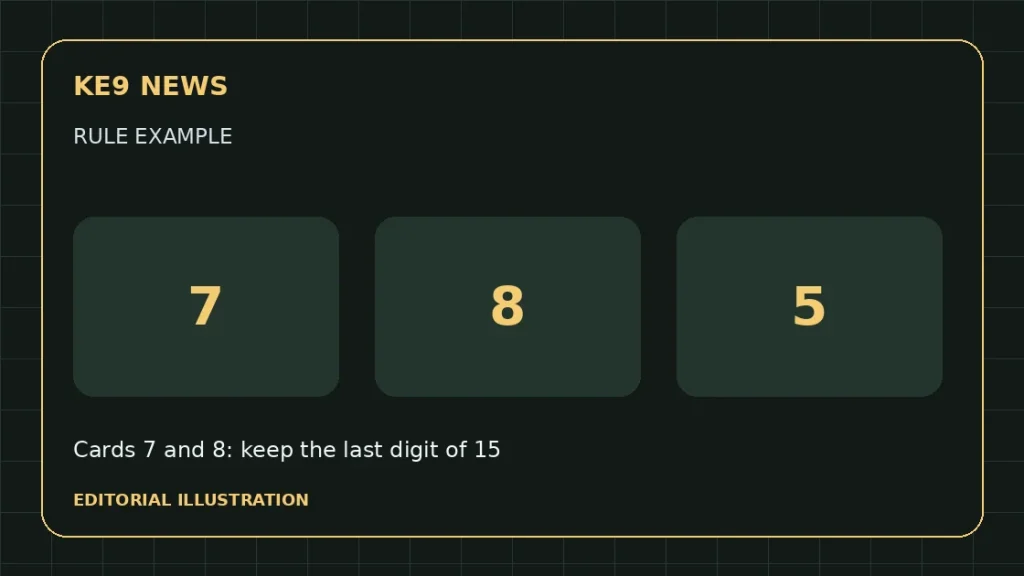
A hand containing 7 and 8 has a total of 5 because the last digit of 15 is 5. A hand of 9 and a king totals 9. Use this to read the displayed score; the final result depends on the complete draw.
How a round works
In standard baccarat the ace counts as one, cards two through nine use face value, and tens and face cards count as zero. Keep the last digit of the hand total. The game applies a drawing rule to decide whether a third card is required; the reader does not choose cards for either hand.
What to verify in this version
Select the ICG entry and read its rules screen. Check the table’s tie treatment, whether a Banker commission or exception is listed, and how any optional outcomes differ from the main hand comparison.
- Provider
- ICG
- Catalog reference
ICG_9